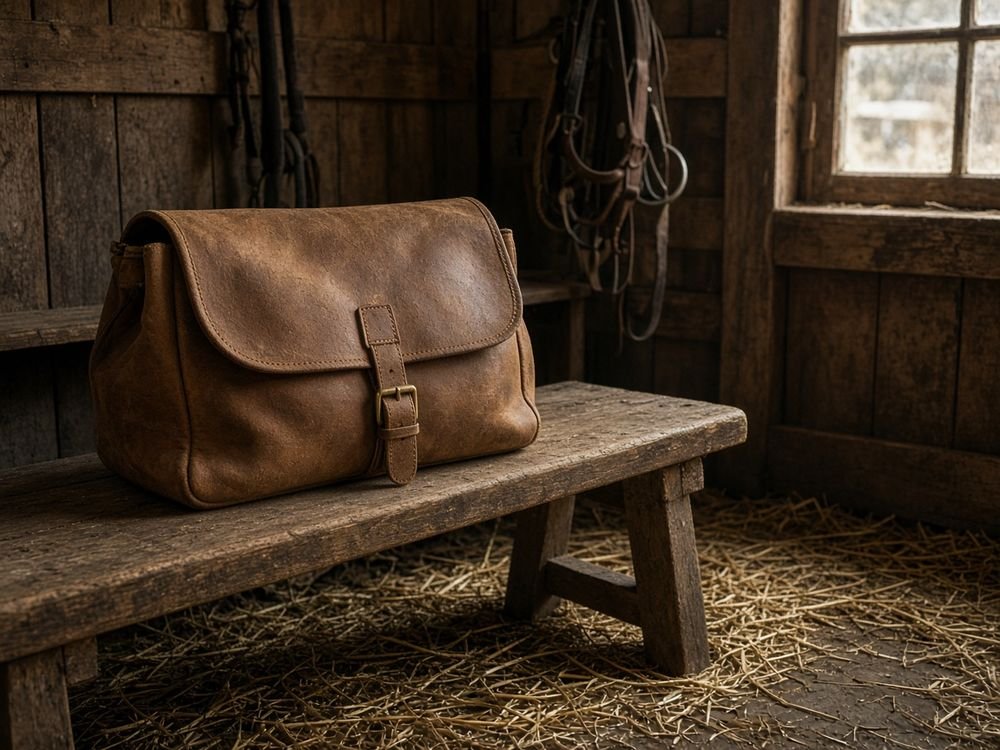
A short run of shapes
Silhouettes Through Time
Bag design keeps a relatively small set of outlines in circulation. A clutch is a short, closed envelope. A saddle bag hangs from a long strap and closes with a flap. A bucket gathers at the mouth. A structured tote stands on a wider base. Each of those shapes can be drawn as a plate, and each plate has a history of small variations: a longer flap, a narrower base, a frame that holds the opening square.
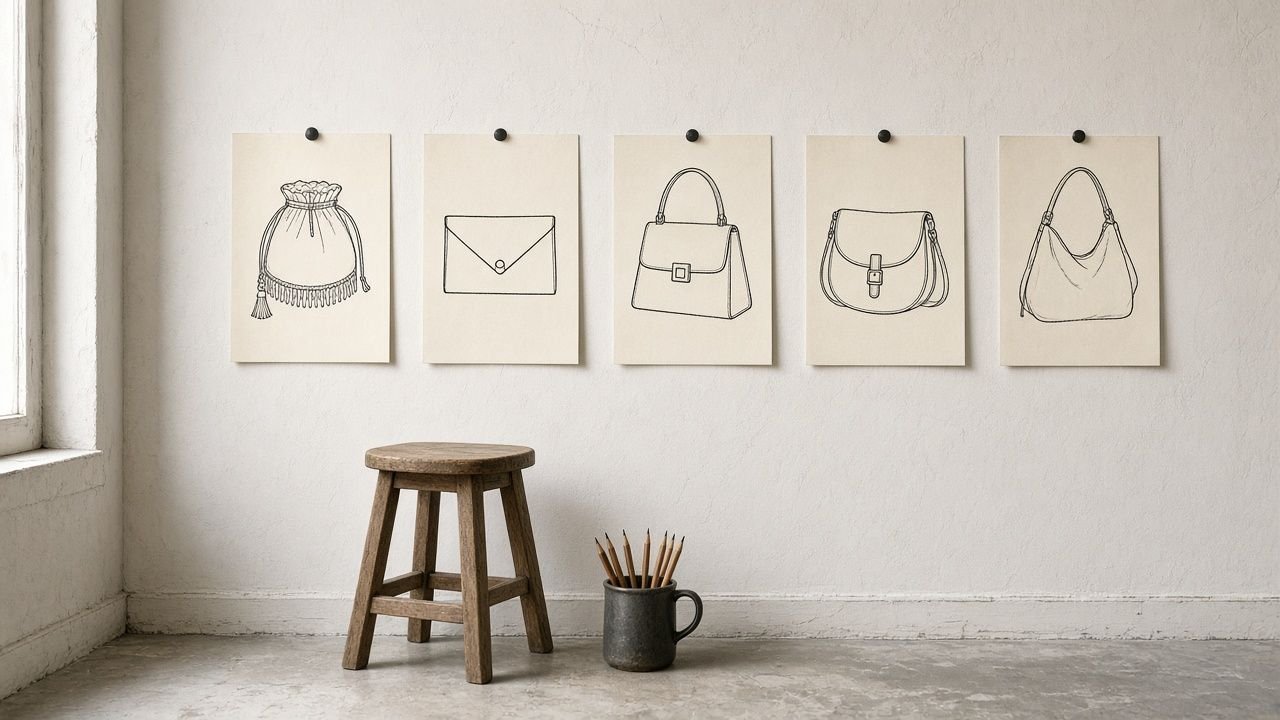
Why the same shapes return
Some silhouettes stay in use because they solve a simple problem well: a clutch keeps its contents close, a tote stands open, a saddle bag leaves the hands free. Designers rename them and change the proportions, but the cut underneath often stays recognisable.
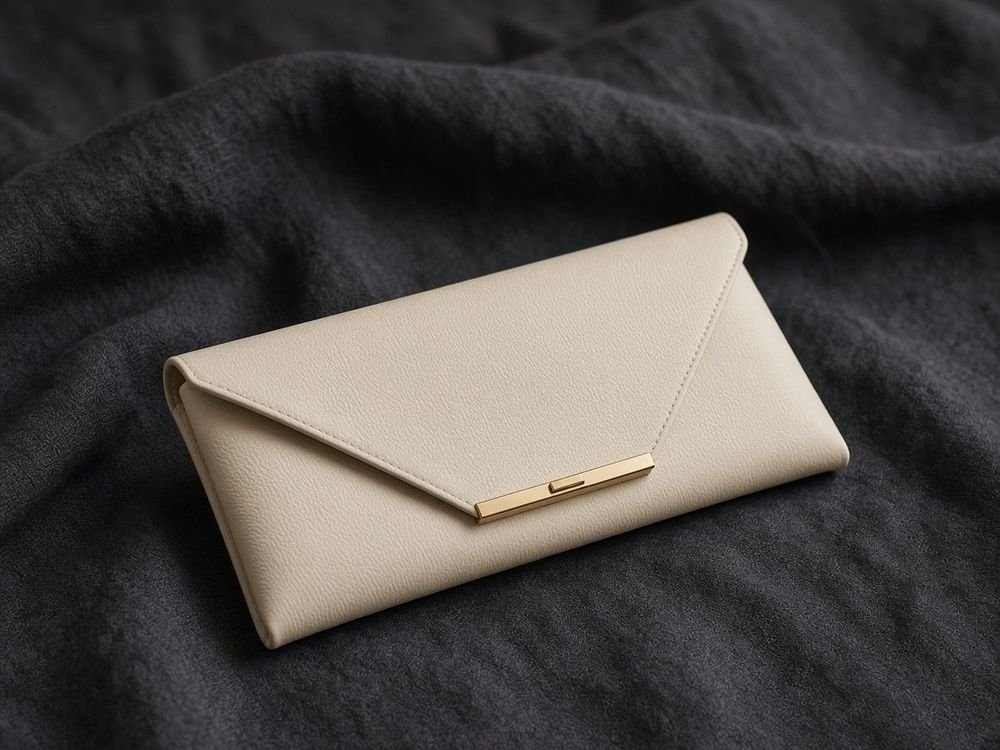
Reading the outline first
This page is a walk through those returning silhouettes, not a catalogue of products. Once you can name the outline, the rest of a bag — the lining, the hardware, the handle — starts to read as a set of choices around a known form.