How a plate is read
Reading a Pattern
A bag pattern looks, at first, like a scatter of lines. It becomes readable once you know which marks are instructions.
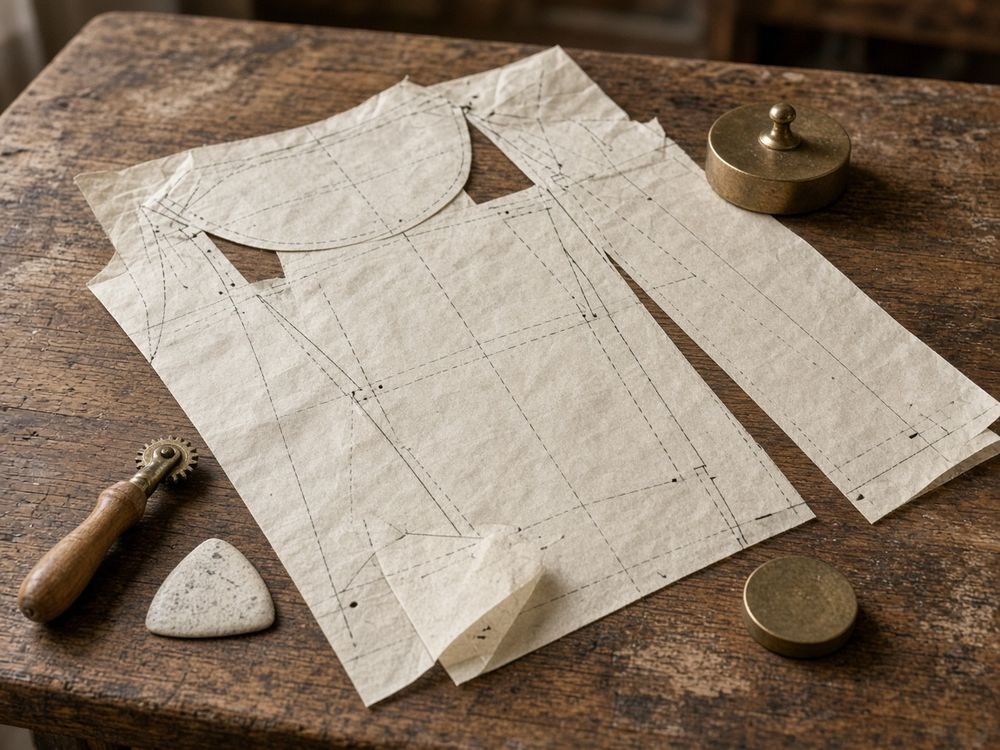
Grain, notches and allowances
A grain line keeps the hide or cloth from being cut on the bias unless the design asks for that stretch. Notches are meeting points: two edges that must be joined in a particular place. Seam allowances sit outside the finished outline, and they are easy to mistake for the outline itself if you are new to the sheet.
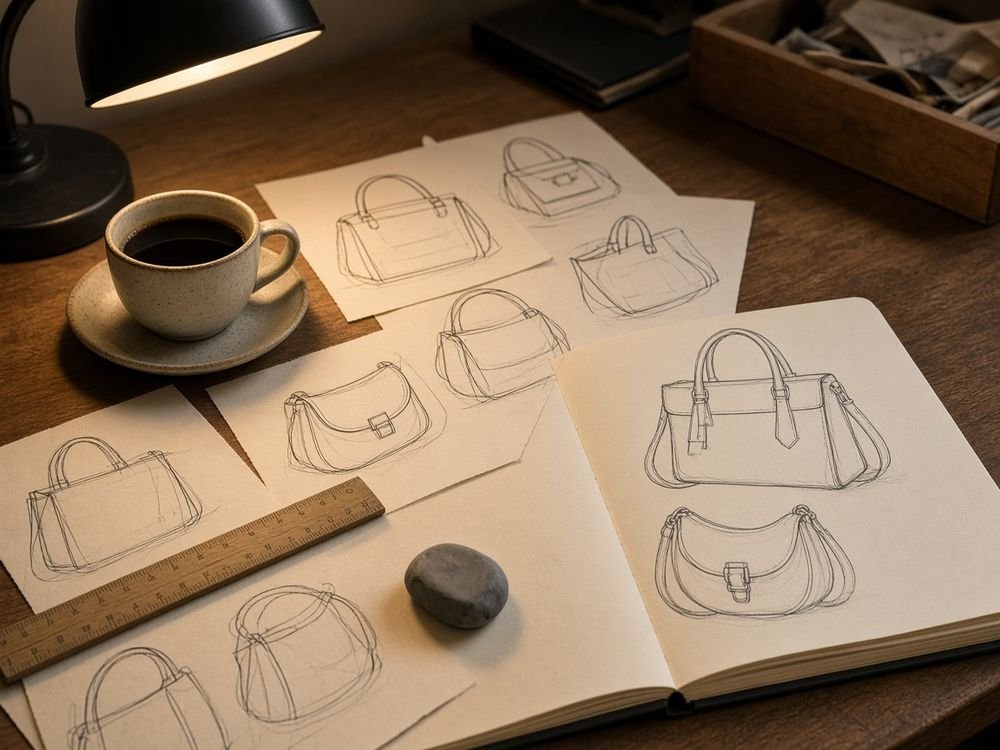
Spare plates and talkative ones
Older plates often assume a workroom already knows the house method, so they are spare. Newer drafts tend to spell more out, with written notes along the margin. In both cases the sheet is a record of a shape, and learning to read it is the work this journal keeps coming back to.